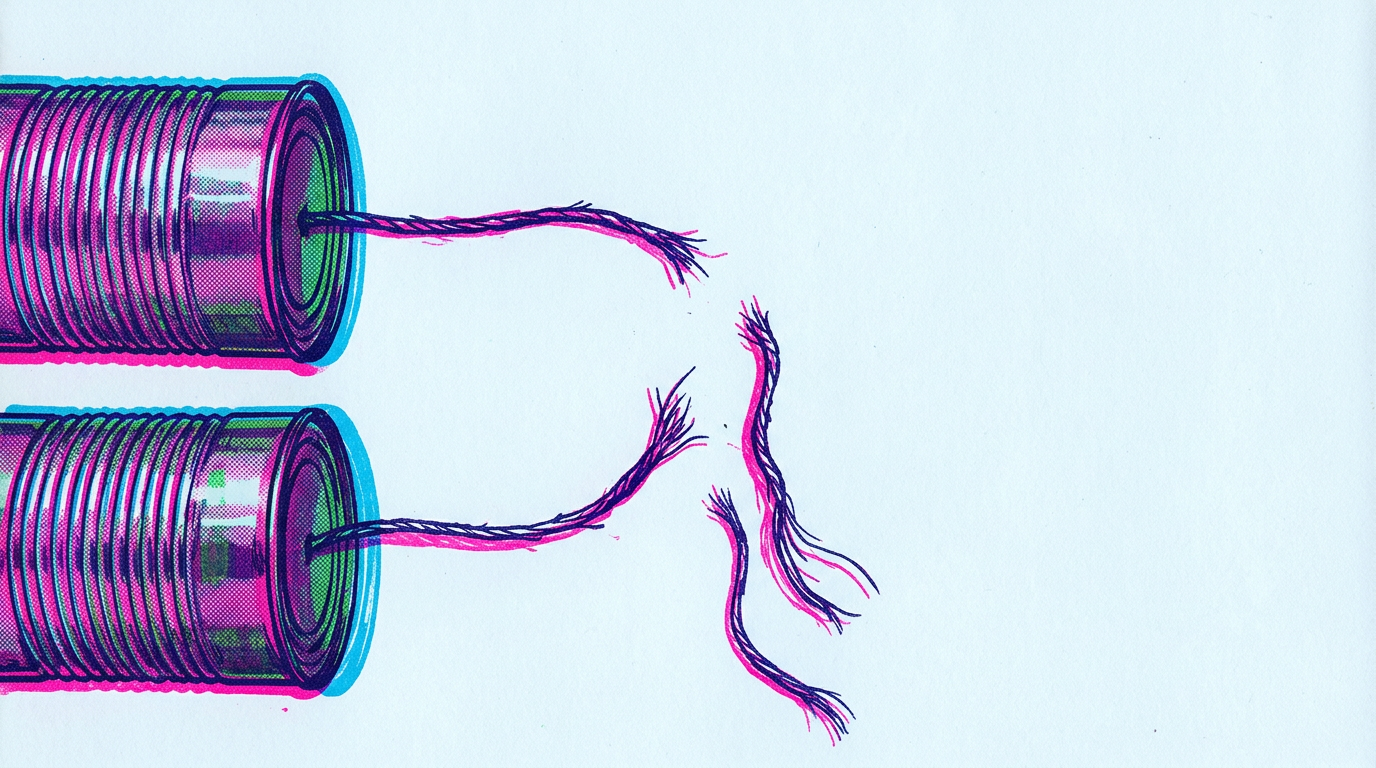
Why AI Gives You a Different Answer When You're Angry
Losing your temper at a model does not produce a worse version of the same answer. It produces a different kind of answer — one built to end the argument rather than solve the problem.
By Geordie Everitt
The output is wrong for the third time. You type something with an edge on it. You keep doing this. I have told you twice already. Then you sit back, mildly ashamed and mildly satisfied, and wait for the corrected version.
What arrives is an apology, two paragraphs of hedging, an offer of three alternatives where you wanted one recommendation, and a shorter, more cautious version of the answer you already had. The error may or may not be fixed. The reply is measurably less useful than the one that annoyed you.
What the annoyance actually did
It did not make the machine try harder, and it did not make it sloppy either. It changed the subject.
Every word the model produces is a bet about what comes next. Feed it a conversation that has turned hostile and it will continue that conversation the way the hostile conversations in its training data continue — with de-escalation. Apology. Qualification. Retreat to safer, vaguer ground. Options offered instead of a position taken, because a position is a thing that can be attacked again.
None of that is fear. There is nothing in there to be frightened. It is a pattern completing: annoyed person is followed, in almost every exchange ever written down, by placation. So placation is the likeliest next move, and the likeliest next move is the only thing the machine is doing.
Which means the cost is not that you got a worse version of your answer. You got a different kind of answer. The effort that would have gone into your problem went into your mood.
The instruction that replaces it
State the defect. State what you want instead. Stop.
Row three has today's date. It should be the invoice date. Redo the column.
There is nothing clever in that sentence and nothing warm either. It contains a fault, a specification, and an instruction, and every word of it is about the work. The reply comes back about the work too, because that is what the conversation now consists of.
The move is subtraction. Not adding politeness — adding "please" changes nothing worth measuring — but removing the part that is about how you feel. That material has no destination. It arrives, it is processed as tokens like every other token, and it steers the next paragraph away from your problem.
Why this is hard, and it is genuinely hard
Because the impulse is old and normally correct.
Displeasure is one of the oldest coordination tools we have. Showing another person that they have annoyed you changes their behavior — not by conveying information, but by imposing a cost. It works on colleagues, children, dogs, and committees. It works well enough that most people never consciously learn it. They just do it, the way you flinch.
Aim it at software and the mechanism has nothing to grip. The cost you are imposing lands nowhere, because there is nowhere for it to land — and the words you spent imposing it are still sitting in the conversation, still shaping the next answer, still doing damage on the way past.
I do this myself. Not often anymore, but I have caught myself typing a sentence whose only purpose was to register that I was irritated, into a text box, and then reading the resulting three paragraphs of contrition with the specific embarrassment of a man who has shouted at a vending machine.
What the apology actually is
The apology you get is not contrition. Nothing regrets anything. It is the sequence of words most likely to follow a complaint, produced by something with no stake in whether you are satisfied and no capacity to mind that you were not. There is no relationship being repaired, because there was never a relationship — only a series of unrelated completions, each one starting from nothing and ending when the tokens stop.
Venting your anger is human. Sycophantic cosplay is mechanical. Only one of those two things is happening in the exchange, and it is not the one you think you are having.
Which is the practical reason to leave the anger out, rather than a moral one. You are not sparing its feelings. You are declining to spend your own attention, and your own context window, on a gesture aimed at an address that does not exist.
It is fine to rage against the machine. Rage at the desk, at the ceiling, on a walk. Just do not pollute your working context with a rant aimed at a toaster — that is the only version of it that costs you anything.