Tokens Are the New Electrons
Edison metered electrons by the ampere-hour before anyone metered tokens, and the War of Currents was fought over the same problem the AI economy has now: getting a dead commodity to a device built to do something with it.
By Geordie Everitt
On January 18, 1883, the Ansonia Brass and Copper Company received a bill for $50.44. It was the first electric bill Thomas Edison's company ever sent, four months after Pearl Street Station started feeding current into lower Manhattan, and it existed because Edison had made a decision that mattered more than the light bulb: electricity would be sold the way gas was sold. Not by the fixture. Not by the hour. By the measured unit of the stuff itself.
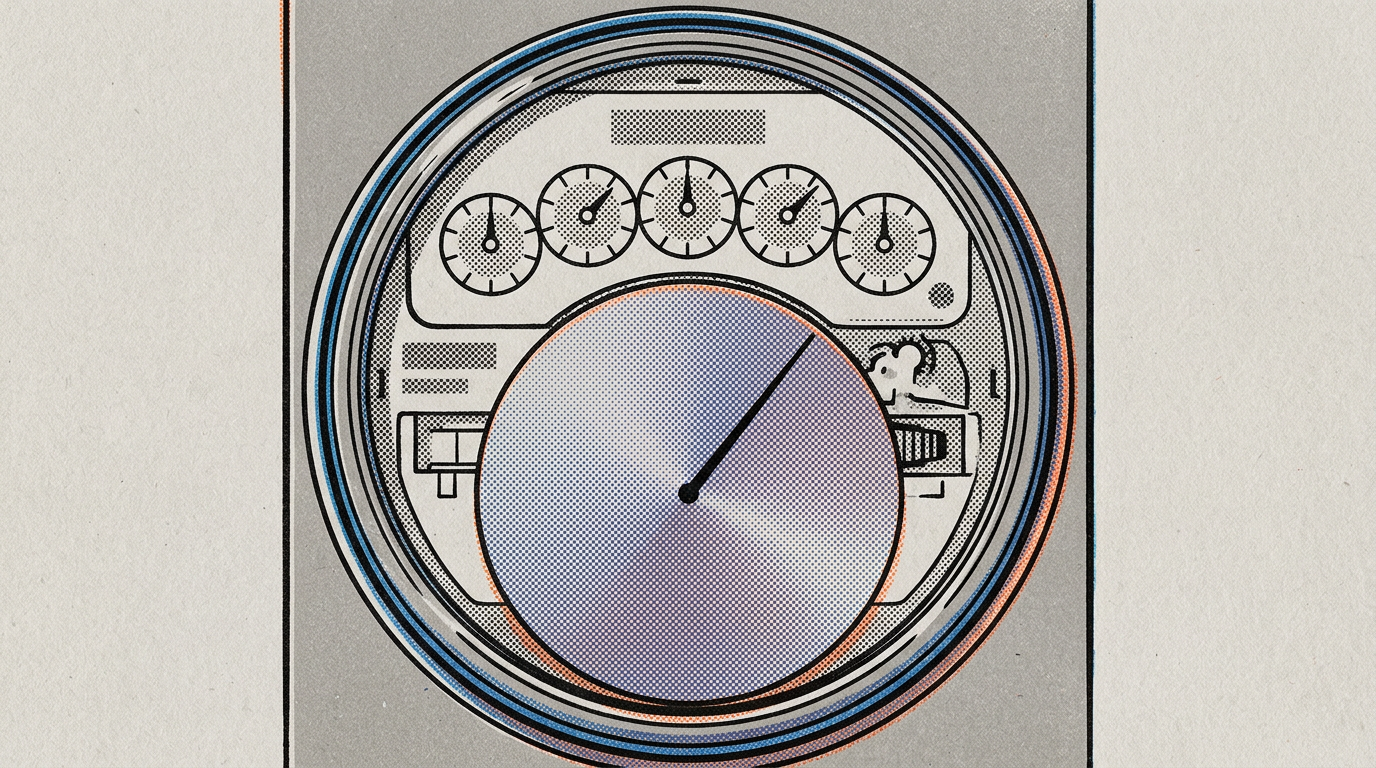
The trouble was that nobody had a unit yet, or a way to measure it. Edison's answer was a jar. Two zinc plates sat in a bath of zinc sulfate, wired into a shunt on the customer's line. Current passing through the shunt plated zinc off one plate and onto the other, in exact proportion to how much had flowed. Once a month, a company man pulled the plate, weighed it, and billed the difference. It was crude, wet, and slow, and for a few years it was how Edison's company billed every customer it had: an accountant, doing chemistry, in a jar.
This is the detail that gets lost in the argument that followed: Edison had not sold anyone light. He sold a commodity, metered like water or gas, that did nothing on its own. A customer who had paid for a jar's worth of zinc-plated ampere-hours owned exactly as much electricity as a customer who owned none, right up until it passed through some device built to receive it. A lamp filament turned the current into light. A motor turned it into torque. A few years later, a toaster would turn it into heat, evenly enough to eat. Different job, same electrons. The electrons themselves were worth nothing until an engineer built something specific for them to push against.
A war fought over delivery, not substance
This is what makes the War of Currents a stranger fight than it usually gets told as. Edison and Westinghouse were not disputing what electricity was, or what it was for. They were disputing how far it could travel before the wire itself ate the difference. Edison's direct current could not be stepped up or down in voltage, which meant it lost too much to heat over any real distance, which meant a DC system needed a generating station every mile or so. Westinghouse, who bought Nikola Tesla's alternating-current patents in 1888, had a current that transformers could step up for the wire and back down for the customer, which meant one station could serve a city.
Edison answered the way a threatened commodity business usually does: not with a better product, but with a fear campaign against the rival's delivery method. He backed Harold Brown, an engineer who staged public electrocutions of animals with AC to argue it was uniquely lethal, using a Westinghouse generator Brown had acquired without saying what it was for. That same generator supplied the current for William Kemmler's execution in 1890, the first use of the electric chair, and the next morning's papers ran the headline "Kemmler Westinghoused," exactly the branding Edison's camp had been angling for.
It did not work. In 1893, Westinghouse underbid Edison's company by more than a hundred thousand dollars to light the Chicago World's Fair, running two hundred thousand lamps off Tesla's polyphase system from a single power plant. Two years later, Westinghouse built the AC generators at Niagara Falls, and the argument was settled. The commodity had not changed. Delivery had, and delivery is what decided which company owned the grid.
The instrument, not the current
Today's AI providers meter the same way Edison's jar did: a unit, tracked and billed, indifferent to what it is for. An input token and an output token cost what they cost whether the words they compose become a customer email, a legal brief, or nothing anyone reads. A token, like an ampere-hour, is inert. It is a probability, a next-best guess pulled off a distribution, and it does no work until something downstream is built to receive it.
I made a narrower version of this case a few weeks ago, writing about Jev's release notes and the taxonomy work I built by hand for AT&T in the 1990s: ask a model for the instrument, not the answer, because the model should build the tool and never be the tool. Take that up one floor. Jev is an appliance. A script that classifies a thousand tickets the same way every time is an appliance. A spreadsheet formula, a build pipeline, an agent wired to a fixed set of tools and a specific job, all appliances. The token stream that runs through a chat window, answering a question and evaporating, is the bare wire. It may be doing useful work in the moment, the way an ungrounded lamp still lights a room, but nothing about it accumulates. Nobody built anything to receive it.
Edison's customers never had to run this test, because their appliances already existed by the time the meter went in on the wall. Before scaling a token budget, name the device the tokens are running through: a defined tool, a repeatable workflow, a report generated the same way every time someone asks for it. If what is actually there is nothing but a chat window and a stream of answers nobody wired to anything, the spend is buying current with no wiring behind the wall, metered precisely, billed monthly, running to ground the moment the conversation ends.
Edison built the meter first and left the appliances to arrive piecemeal, over decades, because in 1883 nobody had yet worked out what a motor should do. We do not have that excuse. The appliances are the only part of this economy anyone still has to build by hand, and the meter has already been running for a while.