Can Tokens Start an Apocalypse?
A stream of tokens is speech produced faster, and the rules belong where the words are wired to something. Then there is the apocalypse that is about money.
By Geordie Everitt
On September 12, Anthropic's chief executive, Dario Amodei, published an essay urging the AI industry to slow down, and OpenAI's Sam Altman and Elon Musk agreed. In 2023 Amodei and Altman had signed a one-sentence statement that put the risk of extinction from AI alongside pandemics and nuclear war. The word apocalypse is in the air, and so is the word token, the unit AI is sold in. So it is fair to ask: can tokens start an apocalypse?
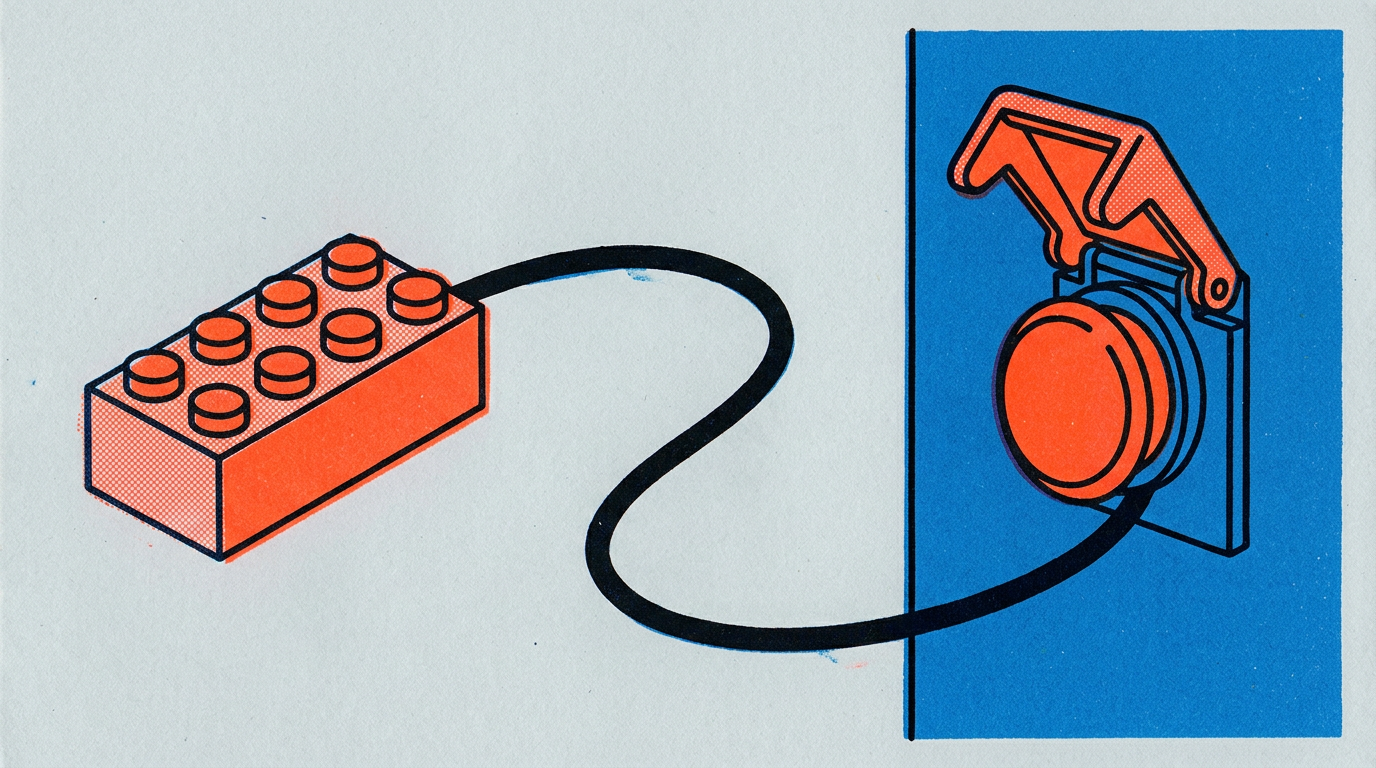
No. As the last piece in this series explained, a token is a LEGO brick with a number on it, the unit of text an AI reads and writes. What is being argued about is what the machine does with the bricks.
So can a token start an apocalypse?
Not by itself. A token is a word, or a piece of one, and a stream of tokens is a stream of words, produced faster and cheaper than a person can write them. That changes the volume and adds no new kind of act.
Take the best-documented case of words used at scale to move a country. A 2018 federal indictment alleged that a company in St. Petersburg, Russia, ran an operation on Facebook, Twitter, YouTube, and Instagram to interfere in the 2016 American presidential election, with more than eighty employees on the project aimed at Americans and a monthly project budget above $1.25 million. People wrote those posts. A model would write the same ones faster and for less, which changes how many a company can afford and does not change what a post is.
The law already has names for what you may not do with words: fraud, forgery, perjury, defamation, incitement. Each is defined by what a person does and the harm it causes, whether the words are handwritten, printed, or generated.
The things that could end a civilization are not made of words. They are warheads, pathogens, and power grids, and each sits behind permission: a chain of command, a regulated lab, a utility regulator. A missile does not launch because someone wrote that it should. In 1983 a Soviet officer, Stanislav Petrov, judged a missile-warning alert to be a false alarm instead of reporting it as an attack. What mattered was that a person stood between the signal and the button.
The danger is in what words are wired to, and the rules belong there, at the missile, the lab, the grid, and the bank, where they are old and tested. I do not know how risky these systems will become, and people who know more than I do disagree. What I can say is where to look: at what the machine is allowed to do with the bricks, and who is watching when it does.
Cheap words and the license
Cheap words have frightened governments before. As printing spread in 17th-century England, Parliament, in the middle of a civil war against a king, passed a Licensing Order in 1643 that required approval before anything could be printed. John Milton answered in 1644 with Areopagitica, which he published without a license. The system ended in 1695, when the House of Commons declined to renew the licensing law, and the older rules about libel and fraud carried on without it. Whoever holds power tends to reach for the license when words get cheap.
The idea is back. In 2023 Altman told a Senate committee that Congress should consider licensing and testing requirements for models above a threshold of capability, with a new agency to issue the licenses. A license is also a barrier to any competitor that does not hold one: a moat built out of permission, the kind I wrote about in A Moat Made of Tokens Is Not a Moat.
The apocalypse that is about money
The warnings are older than the IPOs. Musk said in 2014 that with AI we are summoning the demon, Altman said in 2015 that AI would most likely lead to the end of the world, and Amodei said in 2022 that it could be a threat to humanity. What has changed is the volume, and the calendar. In June, SpaceX, which now includes Musk's AI company, raised about $86 billion in the largest IPO in history. On June 1, Anthropic announced that it had confidentially filed to go public, and press reports put its listing as early as this fall. Altman himself told reporters in August 2025 that investors as a whole were overexcited about AI and that someone was going to lose a phenomenal amount of money.
Meanwhile the moat is getting shallower. Epoch AI, a research group that tracks the field, put the average gap between the best models anyone can download and the best locked-up ones at about four months this year, and the best of them, GLM-5, comes from China's Zhipu AI. A four-month lead is a shallow moat.
The buyers are also learning to need fewer tokens. In September a startup called TypeSafe, founded by a former OpenAI researcher, released Jev, a model that writes no text at all. You give it a message or a document and a list of answers you wrote, and it picks one and tells you how sure it is. It raised $40 million at a reported $200 million valuation, and its makers say it is 40 to 200 times faster and 40 to 400 times cheaper than the big models on that kind of job, figures they tested themselves. Thirty years ago I built this kind of software, under names like TopicSets, autoclassification, and feature extraction: programs that sorted documents into topics and pulled facts out of them. My read is that much of the paid work is heading back to software like that, narrow, fast, and cheap.
My read is also that a company about to sell shares has reasons to want its product to sound as powerful, and as much in need of rules, as it can, just as its lead shrinks and its customers learn to spend less. I cannot see inside anyone's head, and the fear is sincere in at least some of the people voicing it.
If the apocalypse is financial, the kind where a bubble bursts and investors lose their money, tokens still do not start it. A token is a commodity sold by the unit, like bandwidth and storage before it, and each of those fell toward its cost of production. My bet is that the price per token follows.
A crash can be severe, and 2008 showed how far the damage spreads, but it is a different kind of event from the physical ones the statement compared AI to, pandemics and nuclear war.
The word apocalypse comes from a Greek word meaning "uncovering." By that definition, you just lived through one: the cover came off the token, and underneath was a brick with a number on it.